
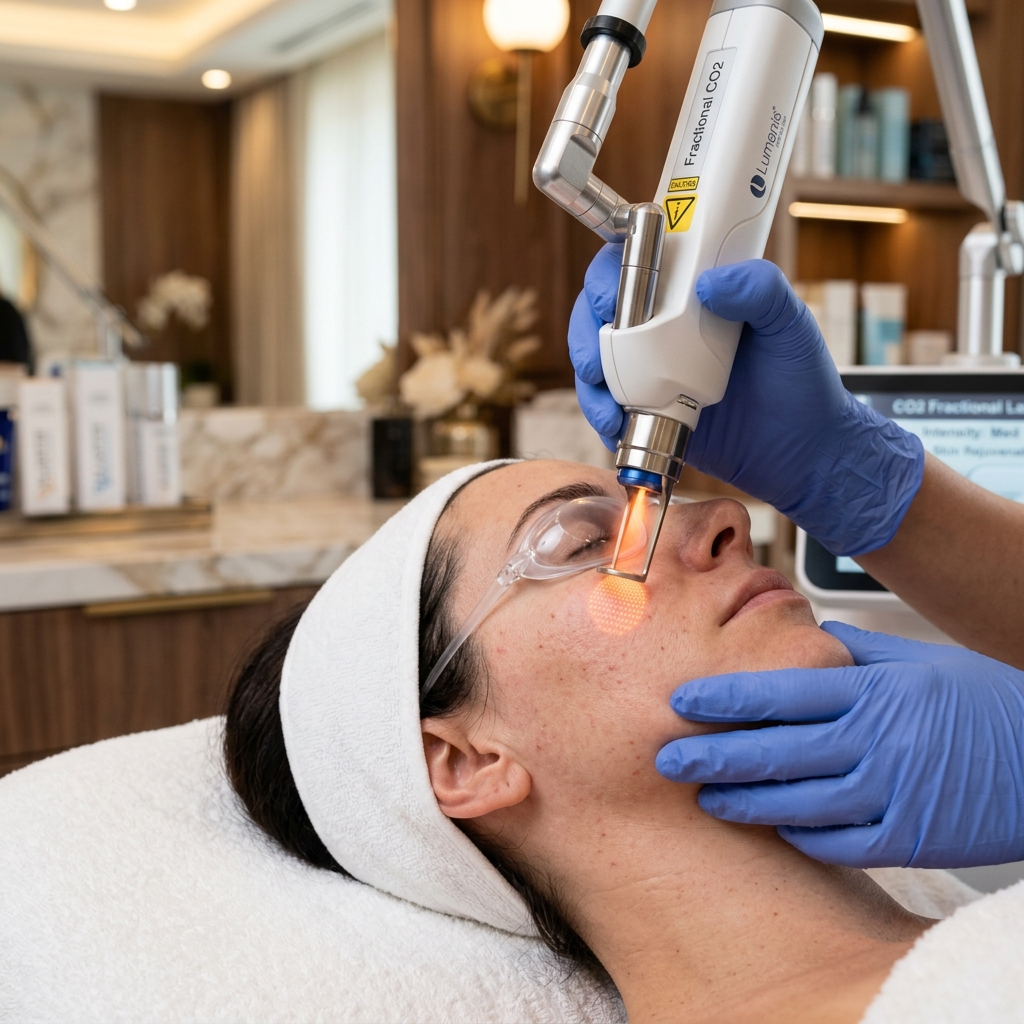
Fractional CO2 Laser Resurfacing: The Gold Standard in Deep Skin Rejuvenation
The 10,600 nm Carbon Dioxide (CO2) laser is universally recognized as the clinical gold standard for ablative skin resurfacing, providing dramatic corrective power for surgical scars, photoaging, and deep textural damage.
Mechanism of Fractional Photothermolysis
Unlike historic fully ablative lasers that stripped the entire epidermis with prolonged recovery, fractional technology delivers an array of microscopic thermal columns known as Microscopic Treatment Zones (MTZs):
- Each MTZ vaporizes a tiny core of epidermis and reticular dermis, reaching controlled depths of up to 1,000 microns.
- Surrounding each microscopic wound is a cuff of thermally coagulated tissue that triggers immediate denaturation and contraction of existing collagen fibers.
- Crucially, intact islands of uninjured epidermal tissue between MTZs provide a reservoir of healthy stem cells that re-epithelialize the surface within 48 to 72 hours.
The Neocollagenesis Phase
Following initial re-epithelialization, heat-shock proteins (HSP47, HSP70) stimulate fibroblasts to synthesize Type III pro-collagen, which gradually transitions over 3 to 6 months into organized, resilient Type I collagen. This biological remodeling tightens lax skin, smooths etched rhytids, and elevates atrophic scars.
Clinical Indications
- Severe atrophic and rolling acne scars.
- Deep perioral smoker's lines and periocular crow's feet.
- Post-traumatic, burn, and surgical scars.
- Advanced actinic keratoses and solar elastosis.
Frequently Asked Questions
What is the expected downtime after a fractional CO2 laser session?
Patients typically experience redness, swelling, and microscopic bronzing/crusting for 5 to 7 days, after which light mineral makeup can be applied as the fresh pink skin matures.
Is Fractional CO2 safe for darker skin phototypes?
Yes, when calibrated by an experienced dermatologist using tailored conservative pulse energies, lower densities, and diligent pre- and post-treatment depigmenting regimens to prevent post-inflammatory hyperpigmentation (PIH).
Consult with Dr. Ammar Al-Jarrah
Book a comprehensive consultation at our clinic for accurate diagnosis and tailored medical care.